An emerging theory about cholesterol is causing quite a bit of controversy within the medical community. The theory is that cholesterol DOES NOT cause heart disease! If this is true, then the millions of people who are on statins simply to lower their cholesterol should not be taking them.
Dr. Stephen Sinatra, a Connecticut cardiologist, is one of the most vocal proponents of this theory. He lays it out in his new book, "The Great Cholesterol Myth." He bases much of his belief that cholesterol is not the cause of heart disease on the fact that half of the people hospitalized for heart disease have high cholesterol.
That means the other half of people with heart disease have low cholesterol! He witnesses the same trend in his own practice. Half of the patients on which he performed angiograms had cholesterol that was very low, and then he had patients with very high cholesterol who had no heart disease at all.
He further explains that cholesterol is quite good for the maintenance of good health. Dr. Sinatra asserts that only a very rare type of LDL cholesterol, the small, dense particles, are harmful. He says doctors should perform particle size tests to check for that, but should do away with the HDL/LDL test because it does not yield results that are less specific than the particle size tests.
So if cholesterol doesn't cause heart disease, what about all the people who take statins for the sole purpose of lowering their cholesterol? Dr. Sinatra and other doctors like him say for the most part, those patients should stop taking their statins. Sinatra says there are exceptions, however, such as middle-aged men who have a history of heart disease.
Statin users suffer with many side-effects. Fatigue, muscle pain, erectile dysfunction are just a few. People who are over 70 are particularly vulnerable, as they often experience forgetfulness that has nothing to do with the normal aging process, but is simply a reaction to the statin they are taking, which they may not even need.
One of the key side-effects of statins is the reduction of CoQ-10, a wonderful vitamin-like substance that our bodies naturally manufacture. CoQ-10 is vital for good health, so anyone taking a statin should take a CoQ-10 supplement, 200 mg each day, 100mg in the morning, and 100 mg in the evening. Unfortunately, as we age, our bodies produce less CoQ-10, so even people who do not take a statin but are over the age of 40 should take 50 mg of CoQ-10 once a day.
So if cholesterol isn't the cause of heart disease, what is? In a word: INFLAMMATION.
It's a silent killer that has also been linked to cancer, diabetes, and autoimmune diseases. The number one cause of inflammation is eating too much sugar.
That is so important it bears repeating: The number one cause of deadly inflammation is eating too much sugar. The average American eats 156 pounds of sugar a year. Two hundred years ago the average American ate 20 pounds of sugar a year.
Most people know what it means to stop eating so much sugar. Obviously it involves avoiding sweets such as dessert food and soda, but it goes way beyond that. It means cutting-out fruit juice, sports drinks, and scanning a product's list of ingredients for hidden sugars.
Do not rely on the packaging itself because food manufacturers often place misleading statements about the nutritional value of a food on the labels. Checking the list of ingredients for sugars like high fructose corn syrup, really any type of syrup, or high concentrated fruit juice, also items ending in -ose, such as sucrose, dexrose, maltose, etc. is imperitive, If the product contains sugar, don't buy it.
Another abundant source of sugar in our diet is refined carbohydrates. These are all the processed grains, mostly processed wheat, that turn into sugar the moment you eat them. Process carbohydrates include all white breads, bagels, muffins, crackers, pasta, and rice. Pass on all these items if you want to reduce the amount of sugar you eat.
Aside from eating too much sugar, another cause of inflammation is eating trans fats. Trans fats are manufactured in a lab. They are not natural! They are oils that have been infused with hydrogen. Therefore, they are listed as "hydrogenated" oils in the list of ingredients.
Once again, do no rely on claims that a product is "trans fat free" of has "0 grams trans fat" because often such claims are misleading and the product does indeed contain trans fats. In order to know for sure, check the list of ingredients for the word, "hydrogenated" and if you see it, don't eat that food.
Inflammation is also caused by smoking. So if you smoke, you must stop. If you've tried before, try again. It's been said that it takes five tries before a person actually quits. Most doctors say the drug, Chantix is the best smoking cessation drug out on the market and that it really works. There are some pretty hefty side-effects, though. So make sure you discuss all of those before you get your prescription.
Inflammation is also cause by eating processed meats. These are meats that you find in the deli section. They are meats that have been salted, smoked, cured, or otherwise changed from their raw state. Lunch meats and hot dogs fall into this category. So stay away from processed meats.
Too many Omega-6 fats also cause inflammation. Omega-6 fats are vegetable oils, the liquid kind. If you eat Omega-6 oils, you should balance that out by eating the same amount of Omega-3 oils, Omega-3 oils are found in fish, nuts, and avacados. Most Americans eat 15 times the amount of Omega-6 fats as they do Omega-3 fats. It should be a 1:1 ratio.
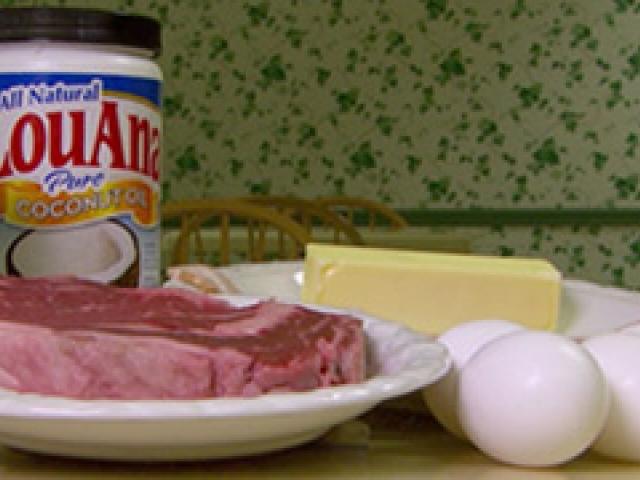
Interestingly, Dr. Sinatra and his colleagues who do not believe cholesterol causes heart disease tout the benefits of not only unsaturated fats such as olive oil, but also saturated fats such as coconut oil and butter and unprocessed meats.
********************************************
Wheat, Carbs and Sugar Dramatically Harm Your Brain
Is it possible that wheat, carbs and sugar do more damage to the human brain than strokes, car accidents and concussions combined?
If you want to improve your memory, lift your mood and even stave-off serious brain problems like ADHD and Alzheimer's, stay away from carbohydrates, says neurologist David Perlmutter.
Listen as he explains why these foods are so harmful to our brains. He also describes what we should be eating instead.
Furthermore, Perlmutter talks about how aerobic exercise benefits the brain.
Sugar Industry, Harvard Researchers Scam Innocent Americans
The scandal took place in the 1960s, according to sugar industry and Harvard documents uncovered by the University of California, San Francisco investigators, including Cristin E. Kerns.
"They were able to derail the discussion about sugar for decades," UCSF professor Stanton Glantz, who wrote the article, said of the conspirators, who are now all deceased.
The bribe shaped American nutrition guidelines that still, in large part, are currently followed, possibly causing untold numbers of deaths.
"The revelations are important because the debate about the relative harms of sugar and saturated fat continues today," Dr. Glantz said.
The deception-for-money scheme initiated a ripple effect, influencing the dietary decisions of millions of Americans. In short, the sugar industry was able to dupe Americans into thinking saturated fat caused heart disease, when all along they knew a primary culprit, if not the primary culprit, was the product they sold.
The shocking disclosure is sparking outrage within the medical community.
She said the documents provide "compelling evidence" that the sugar industry manufactured their own research "expressly to exonerate sugar as a major risk factor for coronary heart disease," then paid the Harvard scientists to tout its credibility.
"You just never see examples that are this blatant," she said.
Here's how it went down. Back in 1964, scientific studies started uncovering the link between sugar consumption and heart disease. Naturally, this alarmed sugar industry executives.
Documents show John Hickson, a top sugar industry executive, devised a plan to divert attention to saturated fat by using "our research and information and legislative programs."
The sugar industry paid for scientific studies that would show saturated fat caused heart disease, not sugar.
"Then we can publish the data and refute our detractor," Hickson wrote.
According to documents, Hickson paid three Harvard scientists a total of $6,500 ($49,000 today) to write a review of the sugar industry-funded research and have it published in the prestigious New England Journal of Medicine.
One of the scientists was Dr. Dredrick J. Stare, chairman of Harvard's nutrition department. Another was D. Mark Hegsted, who was later promoted to the U.S. Department of Agriculture's head of nutrition and in 1977 wrote the forerunner to the federal government's dietary guidelines.
Documents reveal Dr. Hegsted was on board with the plan, writing to the sugar executives, "We are well aware of your particular interest," adding "and will cover this as well as we can."
Dr. Hegsted and his co-conspirators also showed the sugar executives rough drafts of their evaluations of the slanted scientific research, which concluded with a condemnation of saturated fat as a contributor to heart disease, while brushing off the relationship between sugar and heart disease, according to documents.
Hickson was pleased.
"Let me assure you this is quite what we had in mind, and we look forward to its appearance in print," Mr. Hickson wrote.
The plan worked beautifully. After the review by the Harvard scientists was published, the medical community and the public at large pointed the finger squarely at saturated fat as the cause for heart disease, and there was little, if any correlation to sugar.
"It was a very smart thing the sugar industry did, because review papers, especially if you get them published in a very prominent journal, tend to shape the overall scientific discussion," Gantz said.
As a result, Americans entered a no-fat, low-fat craze that prompted an increase in sugar consumption. Obesity rates skyrocketed and heart disease remained the nation's No. 1 killer.
Where does that leave us today?
Fortunately, now the New England Journal of Medicine requires researchers to disclose funding sources. This rule was enacted in 1984. History might have been different if the researchers were required to disclose the money paid to them by the sugar industry.
As for the sugar industry's response to this, a statement by the Sugar Association said the industry "should have exercised greater transparency in all of its research activities," but stands by its claim that sugar does not have a unique role in heart disease."
Meanwhile, today's government dietary recommendations still include warnings about saturated fat consumption, although the American Heart Association and other agencies are starting to include warnings about sugar consumption as a risk for heart disease as well.

 *********